

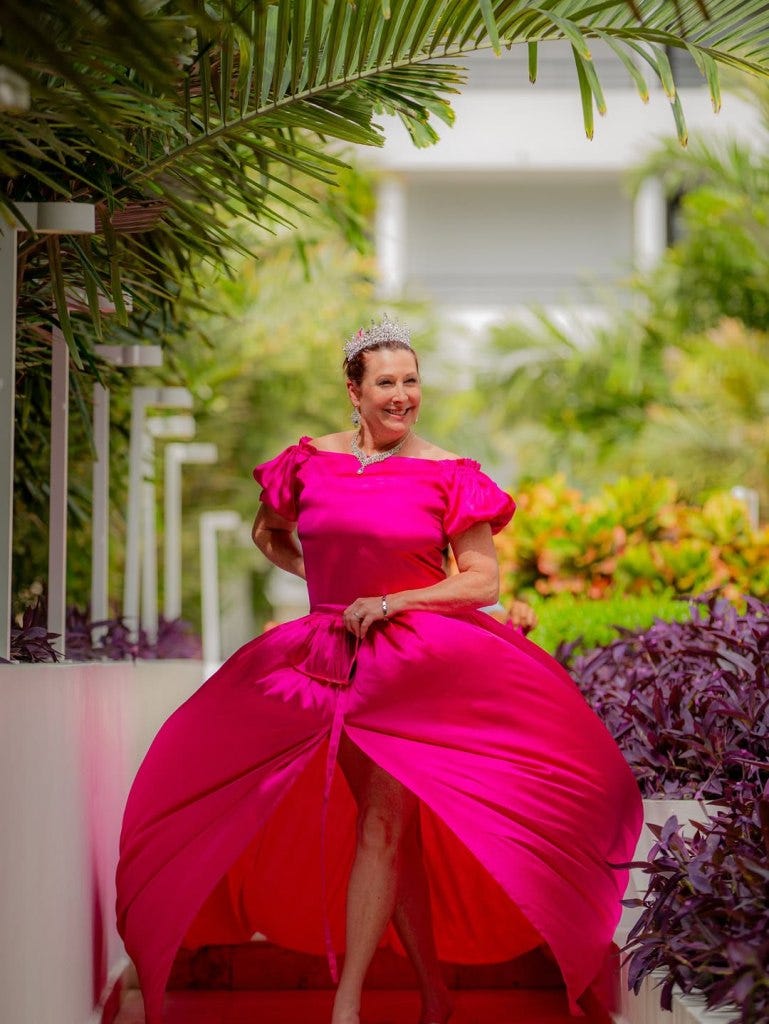
Menopause is often discussed in terms of symptoms, protocols, and fixes. What’s spoken about far less is the inner terrain, the thoughts we carry, the stories we absorb, and the relationship we have with ourselves as everything begins to shift. Lisa R Triggs, widely known as The Menopause Queen, brings a deeply human, lived perspective to this conversation. Rather than positioning herself as an expert with answers, Lisa speaks from experience, honesty, and reflection. Her insights remind us that menopause is not just a hormonal transition, but an emotional and psychological one too. In this conversation, she shares how perspective, self-awareness, and self-love can fundamentally change how this chapter is lived, not by denying the challenges, but by meeting them differently.
You often talk about mindset as the missing piece in menopause support. From your work with women, what mindset shift makes the single biggest difference to how women experience this transition?
From my experience, the biggest mindset shifts come from a change in perspective. We view menopause as an awful phase, and that thought alone can determine the direction it may go for you. The trick is to focus on the good that can come out of being in this phase of life. You might be more grounded as a woman. You know what brings you peace. You take more time for yourself. And then there are the positives that come with having no monthly visitor.
Fear-based narratives around menopause and ageing are everywhere. How do these stories shape women’s symptoms, confidence, and self-trust, often without them realising it?
I am not a coach, so I can only speak from my own experience, and I have found that fear comes from letting the noise of the outside world affect what’s going on inside of us. From opinions, taking on the problems of others, internalising your feelings, and even job-related stress. Society puts these pressures on us to look and act a certain way. During our menopause years, we are more vulnerable to letting these things in, so it takes awareness to firstly observe what’s happening and then decide which path best suits your health goals.
Many women arrive at midlife feeling blindsided by menopause. What beliefs or assumptions do you see women needing to unlearn most urgently?
I would never assume that what’s happening isn’t related to menopause. I experienced symptoms like vertigo and electric shock that I had no idea were menopause symptoms. Do your own research because there are still many physicians who aren’t up to speed on the growing number of menopause related symptoms.
How can women begin to move from feeling at the mercy of their hormones to feeling informed, grounded, and empowered in their choices?
Women can begin to move from feeling at the mercy of their hormones to feeling more empowered by taking action. Do your own research, advocate for yourself with your healthcare provider, join menopause specific groups, and buy books that explain what’s happening to your body. Decide which direction is best for you. Is hormone replacement therapy an option, or do you prefer a more natural health plan?
It’s also important to consider your current state of health. Your current health will most likely affect your menopause journey.
When women feel anxious, overwhelmed, or disconnected during menopause, how much of that do you see as biology versus conditioning and internalised messaging?
I’m not a doctor, so I can only speak from my own experience, but when women feel disconnected during menopause, I think it’s everything jumbled together. Biology, outside noise, conditioning, and internal messaging. Menopause can be overwhelming. It was for me. I allowed everything to affect me. I internalised too much when I needed to set boundaries. Self-talk is so important during
menopause. Loving yourself is the most important thing of all. When you love yourself first, the rest of the world falls into place, even during menopause. Turn off the outside noise and focus on you.
What practical mindset tools or reframes help women interrupt spirals of fear, catastrophising, or self-blame when symptoms arise?
There are two things that I begin every day with and swear by to reframe life essentially. Centring and writing. There are scientific benefits to meditation, such as lowering stress. Being in a relaxed state for even 10 to 15 minutes calms the nervous system and helps you gain control when you’re feeling like things are spiralling. For the most effective benefit, write directly after for 10 to 15 minutes. Start with what you are grateful for. Gratitude does wonders for reducing stress and evokes feelings of happiness and joy, which raise your energetic vibration. This exercise alone allows you to remember what’s good in your life, letting what’s stressing you seem less important. Less stress = symptom reduction from my experience.
Midlife is often portrayed as a period of loss of youth, energy, and relevance. How do you help women reframe menopause as a transition rather than a decline?
When I turned 50, I began to go through a midlife crisis of sorts. I began to think about my mortality. How much time do I have left? Will I get sick? I allowed it to bring me down even further. I allowed those thoughts and many others to consume me. But then I realised that I did have more control over how long I lived and how I lived. I could take better care of myself. I could choose to be happy instead of miserable. It was all in how I looked at it. In my book, I write about choice. Choosing to think, act, and speak in a way that benefits my life. Wallowing doesn’t benefit me. Choosing health benefits me. Choosing gratitude uplifts me. Choosing to love more brings me joy. These are things that make me feel youthful and give me energy. Relevance is perspective. I choose to believe that I have something to offer the world, and that what I offer has value. That value has impact, and my impact is relevant.
What role does self-compassion play in navigating menopause well, especially for women who are high-achieving, responsible, or used to pushing through?
In my experience, we, as women, just carry on. We don’t acknowledge that we might need help, or we accept that this is just the way it is because that’s what we have been told. We’re too busy to take time for ourselves, to work on ourselves, so we want the quick fix. What drug can I take to make it go away or feel better? That’s all well and good, and your choice. But how long do you take that drug? What side effects come with that drug that may impact your life in other ways?
I’ve discovered that we, as women, need to stop band-aiding life and work on releasing it more. (Just my observation) A big part of what I noticed was that I was carrying around guilt and other things from the past that were affecting me during menopause. Things I thought I had dealt with were present again. So, I had to work on not being so hard on myself. I couldn’t change the past. I could only do my best in the present. I needed to forgive myself and others. That forgiveness was rooted in self-compassion. It was time to let go of what no longer served me and focus on what does. I think that menopause isn’t something we can just handle because nowadays, due to our life expectancy, we can spend 40% of our lives in our menopause phase. That’s a big number. So, what story do you want to write during that 40%?
If a woman feels late to the conversation and wishes she’d known more earlier, what would you want her to hear now instead of regret?
I want women to know that you are never late to the conversation. Anytime is a good time to love yourself more.
There were times I was hard on myself. Times when I thought I was dumb for not using the Google Gods to figure out what was happening to me. But I just wasn’t in that frame of mind. I was preoccupied with my life circumstances, so I did what action I thought was best. I went to see my doctor and got a prescription. Then I went to see a naturopath and took some homeopathic remedies. After that, I hired a personal trainer.
It wasn’t until I realised that I had been living in a negative state for years, allowing everything to bring me down, that I began to shift. I had been through 10 years of perimenopause and had completed full menopause. I was in post menopause when I had these transformative revelations that impacted my life wholly.
There is no regret. Regret invokes fear and negative emotions. Negative emotions don’t serve you during menopause or any other time. The present is what matters.
Looking back across the women you’ve supported, what is the one truth about menopause you wish more women understood sooner, before fear took root?
The one truth about menopause I wish more women understood sooner is that how we think about ourselves affects the journey. Choosing to love yourself more creates a world that is lighter and happier. A happier world includes less stress.
I’ve often wondered what makes one woman’s journey more difficult or easier than another’s. For me, the answer lies in a few things: socio-economic status, lifestyle, and self-love.
In a socio-economic world, a woman will buy what she needs to feel better. Those who live a healthy lifestyle generally manage by making dietary and exercise adjustments.
Self-love, on the other hand, affects everyone. Every single woman can benefit from loving the person she is from the inside out. Knowing and understanding that beauty is only skin deep, and that the self-confidence she has is what the world around her will respond to. The energy she gives off when she is healthy, relaxed, and joyful is returned to her.
What Lisa offers, above all, is permission. Permission to slow down, to turn down the noise, to stop being so hard on ourselves, and to recognise that menopause is not something happening to us, but something unfolding with us. Her words gently dismantle the idea that we are late, broken, or failing, and replace it with a quieter, more powerful truth: how we think about ourselves shapes how we experience this season of life. Menopause, as Lisa reminds us, can span decades. It is not a phase to endure, but a chapter we are actively writing. And the most important choice we make in that writing is how much compassion, forgiveness, and love we allow ourselves along the way.

If this piece stayed with you, don’t rush past it. Let it settle.
You can take this further inside The Midlife Circle, where I share more personal reflections, deeper conversations, and gentle guidance to help you live this chapter with more clarity, intention, and ease.
If you’re feeling the pull to go deeper in a more personal way, you can also explore working with me. And if this resonated, tap the ♡, leave a comment, or share it with someone who might need this today.