

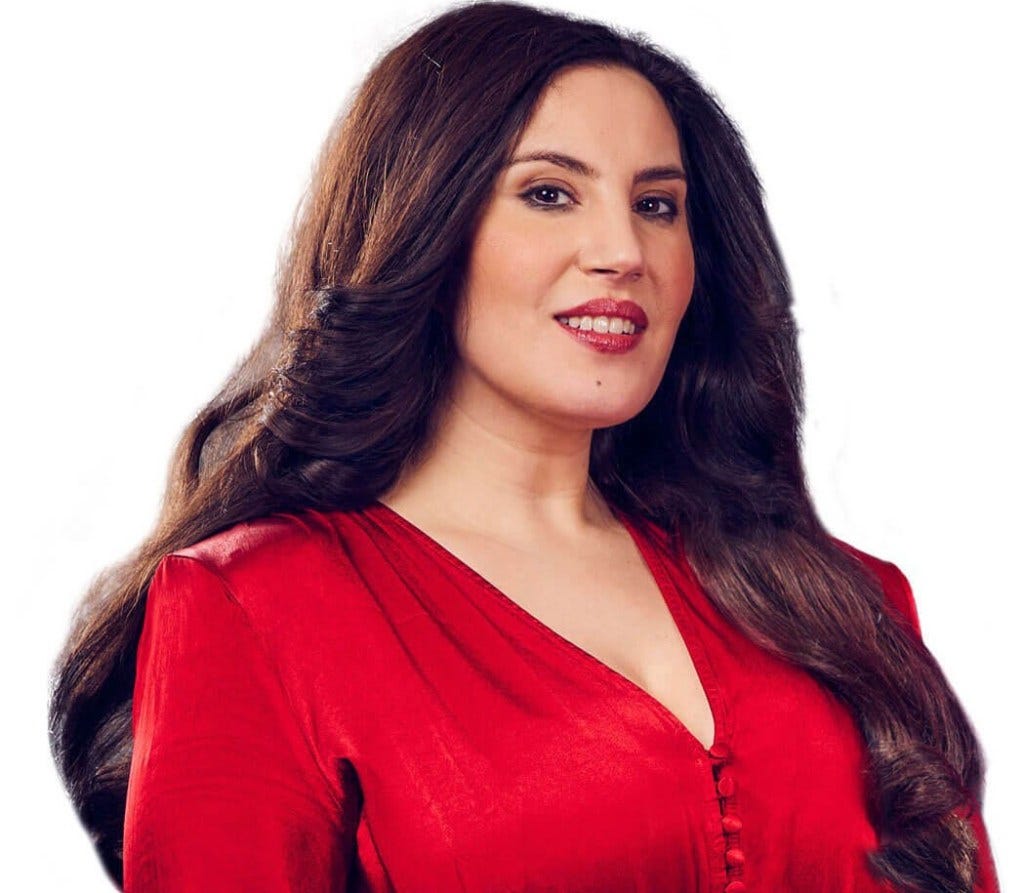
Donna Power has spent years at the intersection of clinical menopause care, workplace policy, and lived reality. Having worked alongside some of the world’s leading menopause clinicians, including helping to establish the Marion Gluck Training Academy to train doctors internationally, she has a deep understanding of the system from the inside. But Donna’s perspective is also deeply personal. She has navigated early menopause, breast cancer, a total hysterectomy, and menopause without HRT. That combination gives her a rare clarity about where menopause care is effective, where it falls short, and who gets left behind. In this conversation, Donna speaks candidly about the gaps that still exist in healthcare and workplaces, the dangers of inconsistent knowledge, and why choice, nuance, and whole-system thinking are non-negotiable if we truly want to support women through this transition.
You’veworked closely with leading menopause clinicians for many years while also navigating early menopause yourself. How did your personal experience change the way you understood the gaps in menopause care and support?
I realised more than ever just how individual and complex menopause can be, and how debilitating it can be. Menopause affects the entire system, with overlapping physical, emotional, and cognitive symptoms that do not fit neatly into short appointments or standard protocols.
Even today, with far more awareness than there was three or four years ago, I still see women being dismissed. For those who do not feel right on HRT, or for women who are more complex and cannot take HRT, many end up either continuing to suffer and giving up on treatment altogether or being forced to self-fund specialist care.
There are also still significant gaps across the wider medical system. Whether in gynaecology, oncology, psychiatry or other specialist pathways, there remains a fundamental lack of understanding about hormones and how central they are to women’s health. I hope this changes over time, because improving this knowledge across specialities would transform outcomes for women.
Establishing the Marion Gluck Training Academy helped shape how doctors are trained internationally in menopause care. From your perspective, where has medical understanding improved, and where is it still falling short for women?
I genuinely feel we have come a long way in recent years, and in many ways this has been driven by women themselves feeling empowered to go to their GP and ask for help with their menopause. For many GPs, the overall standard of menopause care has improved, and we do not talk enough about how far things have moved forward. Women now have access to a range of bio-identical hormone options through the health service, which is a major step in the right direction.
In the private sector, particularly among doctors who have undertaken specialist menopause training, I have seen real progress. Menopause care is no longer just about prescribing HRT. Clinicians are developing a much deeper understanding of complex presentations, including endometriosis, the role of the thyroid, functional medicine, nutrition, genomic testing, and truly personalised hormone care. The developments in this space are exciting and show what is possible when menopause is taken seriously as a specialist field.
Where we are still falling short is in consistency across the NHS, and this is not the fault of individual GPs. Much of it stems from the long shadow of the WHI study, which was widely misrepresented and created years of fear around HRT prescribing. Although this has since been debunked and we now understand the benefits of HRT for many women, there was almost a decade when many doctors were actively discouraged from prescribing. That inevitably created a gap in experience, particularly around dose adjustment and treatment changes, and this impact is still felt today.
As a result, women can have very different experiences depending on the GP they see. One may be highly knowledgeable and confident in menopause care, while another may still recommend antidepressants as a first-line treatment. This is not because GPs do not care, but because menopause training has historically been inconsistent. I still hear these stories directly from women every day.
The inclusion of menopause in routine women’s health checks every five years is a positive step, and I hope it will help normalise these conversations and improve early support across the system.
You’ve experienced breast cancer, a total hysterectomy, and menopause without HRT. How has this shaped your views on individualised care and the importance of choice in menopause treatment?
It has made me even more fiercely protective of women’s right to choose. My motto is “all options for all women.” Menopause is not a one-size-fits-all experience, and neither should the care be. Every woman’s symptoms, medical history and life circumstances are different, so treatment must always be individualised.
For women with more complex histories who cannot take HRT, this becomes even more important. They need access to clinicians who understand the full range of appropriate non-HRT pharmaceutical options as well as alternative approaches. Too often, this knowledge is limited, and women are left believing they have no options at all.
A good example is vaginal oestrogen, which is now increasingly being considered as a possible option for some women after breast cancer, following specialist advice. When women are not fully informed, they cannot make empowered choices about their own bodies. That is why informed, individualised care is not a luxury; it is essential.
Many women still feel dismissed or misunderstood when seeking help. What patterns do you see in how women’s symptoms are interpreted, especially in complex cases like yours?
One of the most common patterns is that symptoms are written off as stress, anxiety, burnout, or ageing rather than being recognised as part of hormonal change. I often see women who present with one dominant symptom, such as tinnitus, which is then treated in isolation, and the underlying hormonal link is overlooked.
Another is fragmentation. Sleep is treated in one place, mood in another, pain somewhere else, without anyone looking at the whole picture. Menopause is systemic, but care can often be disjointed.
Meno-Pause focuses not only on women but on the organisations they work within. Why is workplace menopause support so critical, and what do employers often get wrong?
Our working lives make up a significant part of who we are, and during menopause, this is where symptoms can have the greatest impact. Even today, one in four women considers leaving their job because of menopause symptoms, yet many do not speak up due to fear of stigma, demotion, or being seen differently at work. The symptoms that are often hardest to manage in the workplace include hot flushes, brain fog, fatigue, and anxiety, all of which can directly affect confidence and performance.
There has been meaningful progress in recent years, and I am encouraged by the number of organisations now taking this seriously. I work with many employers who are investing in education and menopause champion training, and there is a growing recognition that women need safe ways to talk about their experiences. For many, that means access to third-party or anonymous support, because they still do not feel comfortable raising this with their line manager. This is where a clear menopause policy is so valuable, giving both existing and new employees visible pathways to support.
What is still often misunderstood is that creating a menopause inclusive culture requires ongoing commitment. It is not achieved by introducing a policy and moving on. Culture change needs reinforcement through training, leadership engagement, and everyday conversations. All employees benefit from this, not just women, because menopause affects teams, managers, and families too, including partners.
There’s increasing awareness of menopause, yet many women still suffer in silence. What do you think awareness alone is missing, and what actually creates meaningful change?
Awareness opens the conversation, but it does not change systems. The first wave of progress has been the incredible rise in public awareness over the past few years. The second wave now needs to focus on understanding and delivering the right treatment options. This largely depends on upskilling GPs and specialists and integrating menopause care more effectively across the health system.
You’ve seen menopause through both a clinical lens and a lived experience. How do we better bridge the gap between medical protocols and the emotional, psychological reality women experience?
I believe this comes down to better training across all areas of healthcare. When menopause is discussed clinically, there must be space to recognise the emotional and psychological impact, not just the physical symptoms.
In a GP setting, there may not always be time to explore this fully, but there should be clear pathways for women to be referred or signposted to appropriate support, including counselling, CBT and EMDR. Menopause often surfaces deeper emotional issues, and for some women, it can bring unresolved trauma to the surface.
More education is needed about what can emerge during this life stage, because menopause is not only a hormonal shift but also an emotional one. Clinicians need to be equipped to recognise this, as for many women, their healthcare appointment may be the only opportunity they have to access wider support.
For women who cannot or choose not to use HRT, what supportive frameworks or conversations do you believe are most helpful but currently underrepresented?
Women need structured, evidence-informed pathways that take their symptoms seriously. This includes targeted support for sleep, mood, pain, cognition and sexual health, rather than being given generic lifestyle advice. Women must understand the full range of options available to them, both pharmaceutical and non-pharmaceutical, so they can make informed choices.
Above all, women need hope. They need to know that, whatever their situation or symptoms, there are still many ways to feel better. Sexual health is one of the most neglected areas, even though there are many effective options available. Supporting intimacy and confidence can be life-changing for women and their relationships, yet it is rarely prioritised.
Many so-called alternative options deserve proper investigation and clinical guidance. Certain supplements and therapies can be effective for some women but are not always considered within mainstream medicine. It is encouraging to see acupuncture becoming more widely recognised for menopause support, and these approaches are particularly important for women who cannot take HRT.
Another underrepresented area is what women can do for themselves. Through nutrition, lifestyle, and daily health habits, many women who are not taking HRT can still see significant improvements in how they feel.
Having navigated major health trauma alongside menopause, how do you talk to women about resilience without falling into the ‘just push through’ narrative?
I always start by reframing what resilience really means, as often I hear the words “I don’t feel resilient anymore”. It’s totally misunderstood. It is not about tolerating suffering or forcing yourself to be strong. It is about having the support, knowledge, and permission to care for yourself properly. Something women are often very good at doing for others, but far less practised at doing for themselves.
This is one of the reasons I established Meno-Pause. I believe this stage of life offers an opportunity to ‘pause’ and recognise that life cannot continue exactly as it was. It is a time to reconnect with intuition, reflect on all areas of life, and begin to ask what we truly want for ourselves. When women start to see possibilities again and imagine
a positive future for themselves, resilience begins to grow. Reconnecting a woman with her own inner power is one of the most transformative parts of this work.
I also encourage women to see rest, boundaries, and asking for help as strength, not weakness. After a major health trauma, pushing through is often no longer sustainable. True recovery comes from allowing the body to find its rhythm again, whatever form menopause takes, and learning to listen to what the body is asking for.
If you could change one belief about menopause within healthcare systems, workplaces, or society at large, what would it be and why?
Menopause isn’t severe enough to be completely life-changing and a disability. It is a major biological transition that can be disabling, particularly when combined with surgical menopause, cancer history, or chronic stress. When it is trivialised, women are underdiagnosed, undersupported, and quietly pushed out of their careers and confidence.
If we change that belief, everything else follows. Better training, better care, better workplace support, and women no longer feeling they must suffer in silence.
What becomes clear through Donna’s words is that menopause is not just a health issue, and it’s certainly not a phase women should quietly endure. It is a systemic issue that touches healthcare training, workplace culture, policy, and deeply ingrained beliefs about women’s resilience and worth. Awareness alone is not enough. Without consistent education, informed choice, and integrated support, women will continue to be dismissed, fragmented, or forced to self-fund care just to feel functional again. Donna’s work through Meno-Pause is a reminder that menopause deserves seriousness, structure, and compassion, not minimisation. When women are believed, informed, and supported to listen to their bodies rather than push through them, something shifts. Not just in symptoms, but in confidence, autonomy, and the possibility of a future that feels liveable again.